
When you push open the door of an Adopt store to buy a perfume for less than thirty euros, you rarely encounter the same customer profile as at Sephora or Marionnaud. Adopt’s ultra-accessible pricing strategy, combined with a network of over a hundred points of sale in France, has long been a clear advantage.
The landscape has changed: between viral digital brands, private label brands, and historical retailers adjusting their offerings, Adopt’s competitors in the beauty market are multiplying and diversifying.
Further reading : Discover the main groups of plants: classification and essential differences in biology
Viral brands on social media: the real threat to Adopt
We are talking about brands that didn’t exist a few years ago and now capture a significant share of young consumers’ attention. Their main lever: TikTok, Instagram, and orchestrated launches like events. These emerging brands, often born online, target exactly the same audience as Adopt, those who want a quality perfume or skincare without paying luxury prices.
What makes them formidable is their ability to generate desire without a physical network. A “viral” perfume can sell out in just a few days thanks to a well-crafted video.
Related reading : What is the best brand of gas auger?
For Adopt, which relies on in-store experience and advice, customer loyalty is directly threatened by these impulsive online purchases. Several market analyses highlight this growing competition from viral perfumes, particularly among buyers who prefer e-commerce.
To understand in detail the main competitors of Adopt, one must look beyond just physical retailers and include these 100% digital players in the equation.
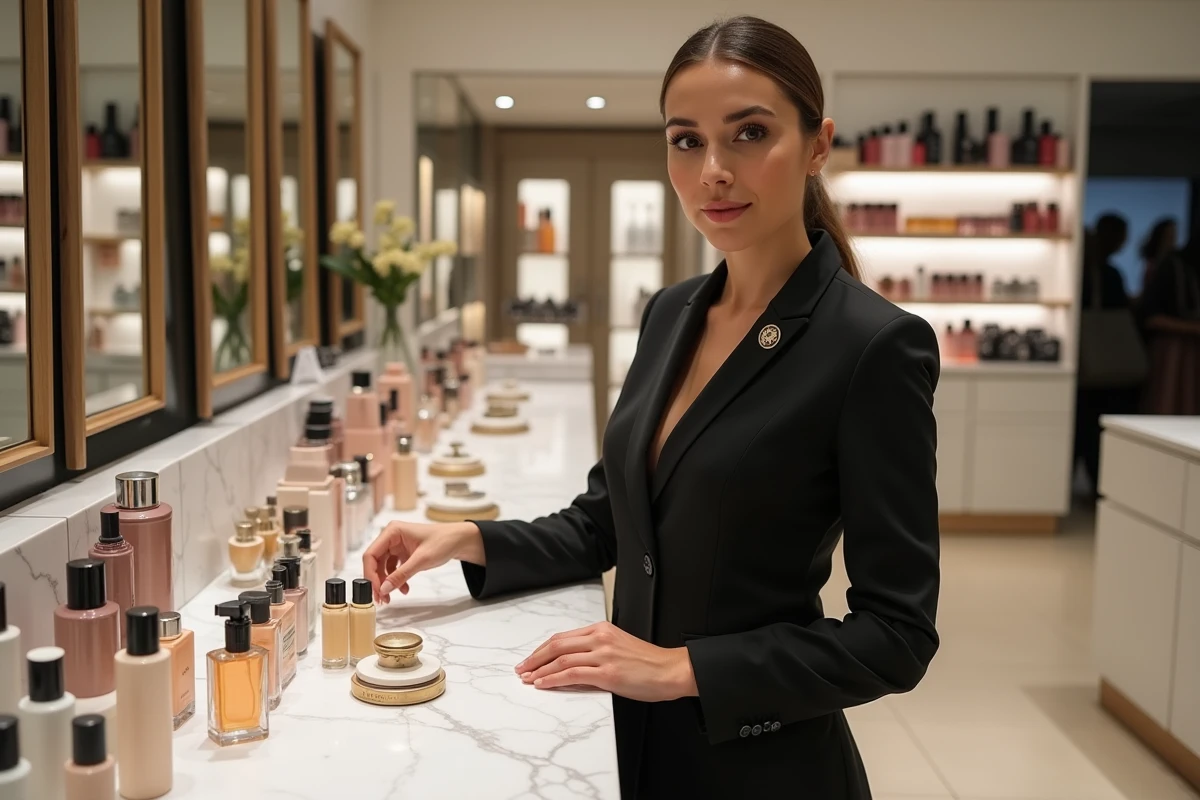
Sephora, Marionnaud, Nocibé: historical competitors of Adopt in perfumery
You cannot map out Adopt’s competition without mentioning the three heavyweights of selective perfumery in France. Sephora, Marionnaud, and Nocibé have been on the scene for decades, with catalogs ranging from mass-market to luxury.
What distinguishes them from Adopt
- A wide catalog of third-party brands (Dior, Chanel, Guerlain, as well as niche brands), whereas Adopt exclusively sells its own creations
- Sophisticated loyalty programs with cumulative benefits on hundreds of references
- A mature e-commerce presence, with fast delivery, samples, and customizable gift sets
Adopt differentiates itself through its integrated model: the brand designs, manufactures, and distributes its products. This short circuit allows it to maintain low prices. However, a customer looking for brand variety will not find satisfaction at Adopt.
Private label brands and low-cost beauty retailers
Private label brands represent a less visible but very real pressure. Retailers like Primark, Action, or even beauty lines from large supermarkets offer skincare, makeup, and sometimes eau de toilette at prices even lower than Adopt’s.
The segment for affordable skincare and makeup has significantly expanded. Brands like Kiko Milano or NYX, positioned on accessible makeup with stores in city centers, are also encroaching on Adopt’s territory in the makeup category.
Adopt’s advantage against private labels
Adopt retains an advantage in the “experience” dimension. Its stores are designed for sensory discovery, with testers available for free access and a carefully curated visual universe. The in-store experience remains a differentiating factor against private labels, which sell their beauty products on shelves, without advice or staging.
Adopt is also considered effective in the gift segment: gift sets, small formats, limited editions. This is an area where private labels struggle to compete, as the act of giving involves a brand perception that supermarket packaging does not always provide.

Composition and sustainability: the new battleground between Adopt and its competitors
The issue of product composition is no longer a secondary marketing argument. Que Choisir references over 600 Adopt products in its comparison of undesirable ingredients, with varying risk levels depending on the ranges (limited risk, presence of allergens in certain references). This type of transparency, imposed by independent comparators, forces all brands in the segment to refine their formulations.
Digital competitors often play the “clean beauty” card from their launch, excluding certain families of controversial ingredients. For Adopt, which has a very broad catalog (fragrances, body care, face care, makeup), harmonizing the composition across hundreds of references represents a concrete industrial challenge.
Sustainability also enters the equation. Consumers, especially younger ones, now evaluate brands based on their packaging, refill, and sourcing policies. This is an area where native digital brands can be more agile than a network of physical stores that must manage stock, point-of-sale materials, and distribution logistics.
Adopt facing competition: what solid differentiation levers remain
Adopt’s strength lies in a triptych that is difficult for its competitors to replicate:
- A floor price on perfume (eau de parfum, eau de toilette) with a claimed “made in France” positioning
- A dense network of stores across the territory, allowing for testing and advice, where viral brands depend entirely on screen perception
- A capacity to play in the gift segment (gift sets, travel formats, seasonal editions) that market analyses identify as a specific strength
Adopt is considered very strong in e-commerce and gifting, giving it a dual presence, physical and digital, that few direct competitors combine at this price level. Growth potential remains identified as positive by industry observers, despite the competitive density.
The accessible beauty market is not going to simplify. The boundaries between selective perfumery, private labels, and digital brands continue to blur, and Adopt’s ability to maintain its brand identity while adapting its formulations and digital strategy will determine its position in the coming years.