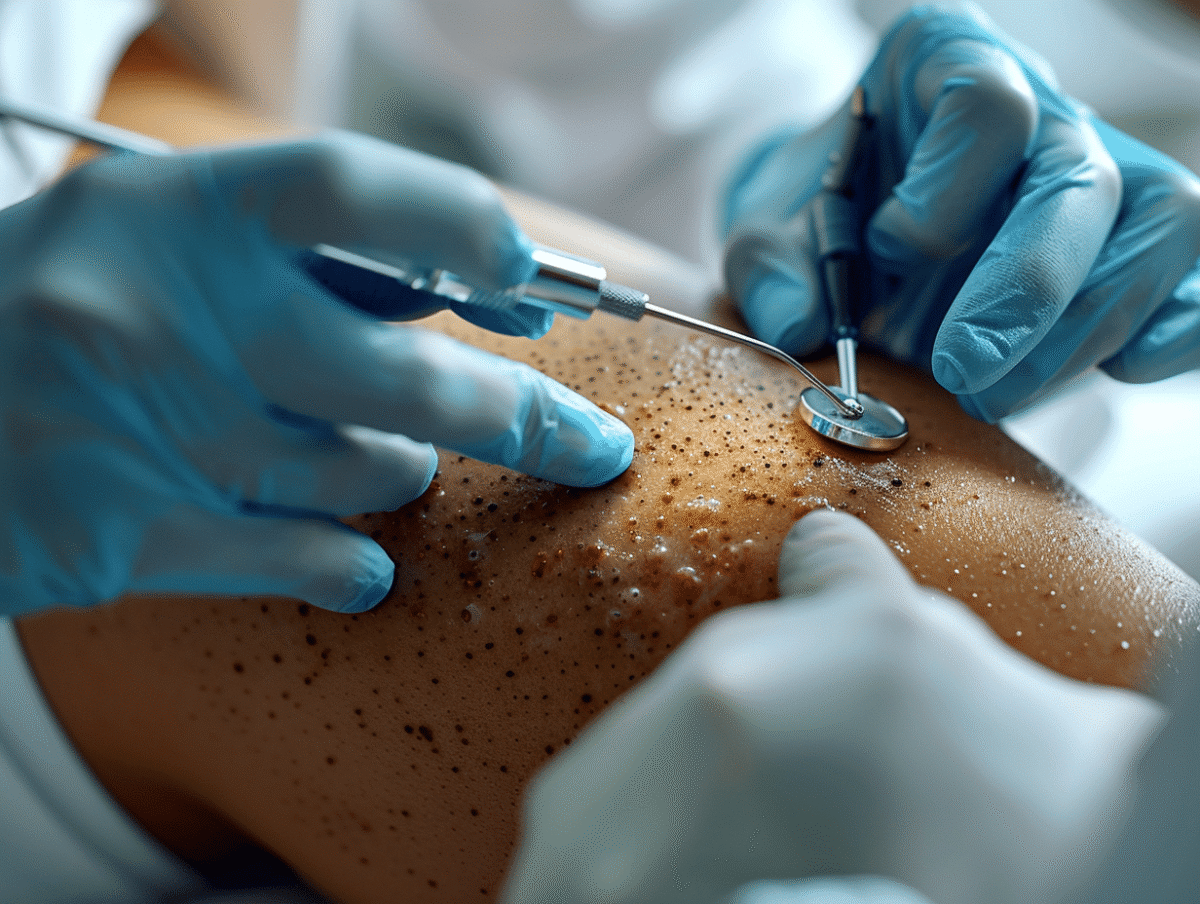
Skin lesions, various manifestations affecting the skin, can be a symptom of benign disorders or more serious pathologies. They present in different forms: abrasions, cuts, ulcers, burns, and can result from multiple factors such as trauma, infections, allergic reactions, or chronic diseases. Early identification is essential for appropriate and effective treatment, thereby limiting the risk of complications. Healthcare professionals strive to determine the nature of the lesions to advise on the appropriate care, ranging from simple hygiene measures to specialized medical interventions.
Understanding Skin Lesions: Types, Causes, and Symptoms
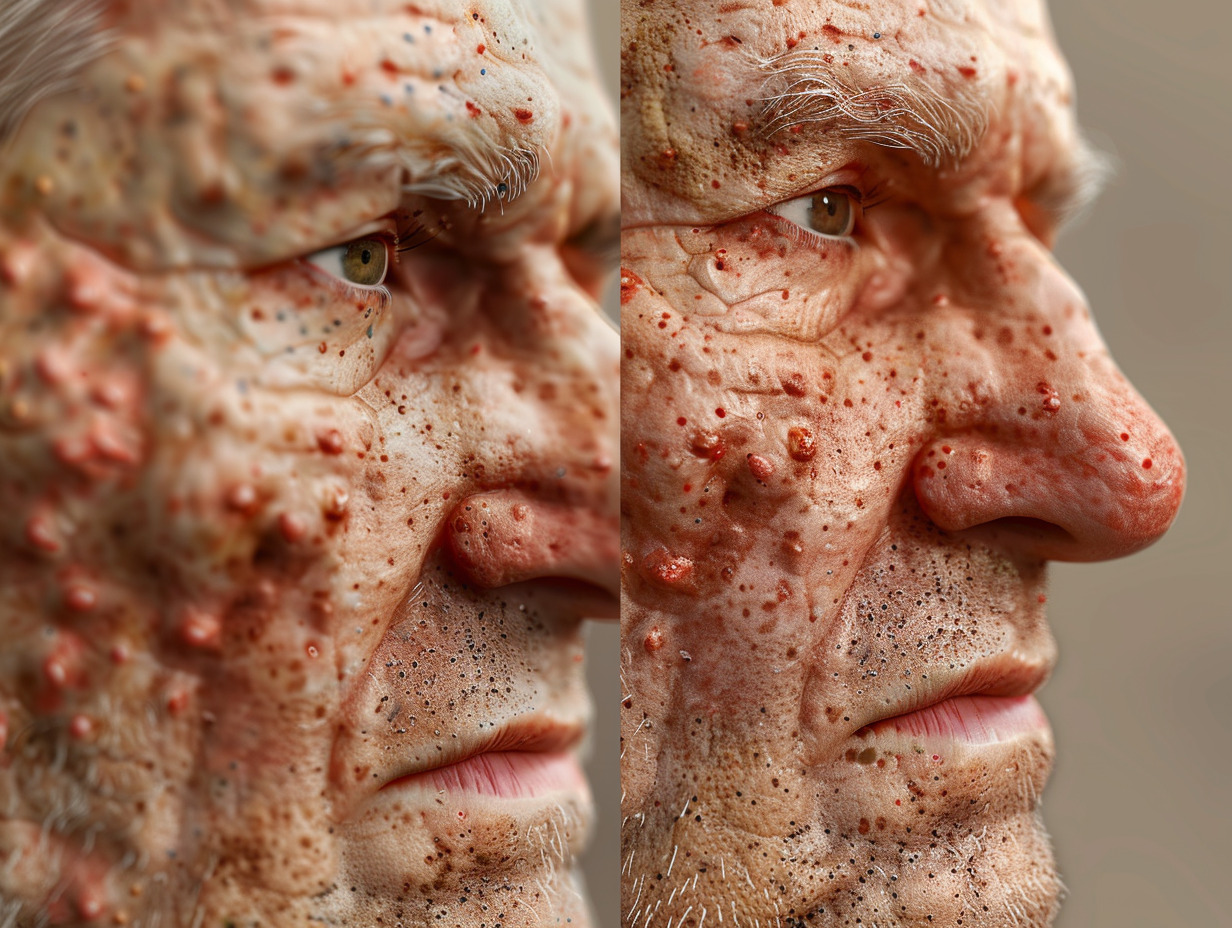
Skin lesions, pathological manifestations of the skin, the largest organ of the human body, are classified into several categories. They can be benign, such as erythemas, simple redness often indicating inflammation, or malignant, like skin cancer, which requires rigorous management, often through surgical intervention to remove cancerous cells. Between these two extremes, there is a plethora of suspicious lesions requiring meticulous diagnosis to determine their exact nature and appropriate treatment.
The genesis of skin rashes is multifactorial. Among the common causes are allergic reactions, triggering intense itching, redness, or even a yellow spot on the skin, a distinctive sign that can guide the diagnosis. Fungal infections, on the other hand, introduce scaly lesions sometimes accompanied by altered skin pigmentation. Chronic diseases, such as eczema or atopic dermatitis, lead to persistent inflammation, characterized by red patches, scaling, and sometimes oozing.
Regarding more serious lesions, such as skin cancer, vigilance is crucial. Self-examination of the skin becomes a healthy practice, allowing for the prompt detection of any anomalies: asymmetry of a mole, changes in its borders, heterogeneity of its color, or increase in size. Consult a healthcare professional without delay for any suspicious lesion, as early identification and intervention are critical for prognosis.
The symptoms associated with skin lesions vary significantly, ranging from simple aesthetic discomfort to acute pain, along with itching or burning sensations. Medical management systematically begins with a clinical evaluation to establish the type of lesion, followed by additional examinations if necessary. The relationship between the affected organ and the skin lesion guides the dermatologist toward the most appropriate treatment, whether it involves local care, dressings, or more invasive therapies such as dermatologic surgery, performed by experts like Dr. Mickaël DURBEC.
Treatment and Prevention Strategies for Skin Lesions
In the face of the diversity of skin lesions, treatment strategies adapt according to the nature and severity of the symptoms. Local treatments, particularly moisturizing and emollient creams, are often effective against mild dryness and irritation. For fungal infections, antifungals precisely target the implicated pathogens. Allergic reactions, on the other hand, require specific care aimed at reducing inflammation and preventing recurrences.
When skin lesions resist or prove too complex for conservative treatments, dermatologic surgery acts as a solid alternative. Performed by highly qualified dermatologists such as Dr. Mickaël DURBEC, this surgical technique allows for the precise excision of affected tissues, including in the case of skin cancers, where the removal of cancerous cells is fundamental.
In terms of prevention, regularly consult a healthcare professional to monitor the condition of your skin, especially if there is a history of skin lesions. Self-observation remains a healthy reflex to identify any suspicious changes. Be cautious of environmental and behavioral risk factors, such as excessive sun exposure, and adopt appropriate protective measures, including the use of high SPF sunscreen.
To strengthen the skin barrier and limit the risk of alteration, adopt a skincare routine suitable for your skin type. Moisturizers and emollients, the careful selection of gentle cleansing products, and the avoidance of known allergens are key pillars in maintaining skin health. In case of doubt or persistent symptoms, the advice of a dermatologist is invaluable in guiding toward the most appropriate therapeutic solutions and avoiding complications.