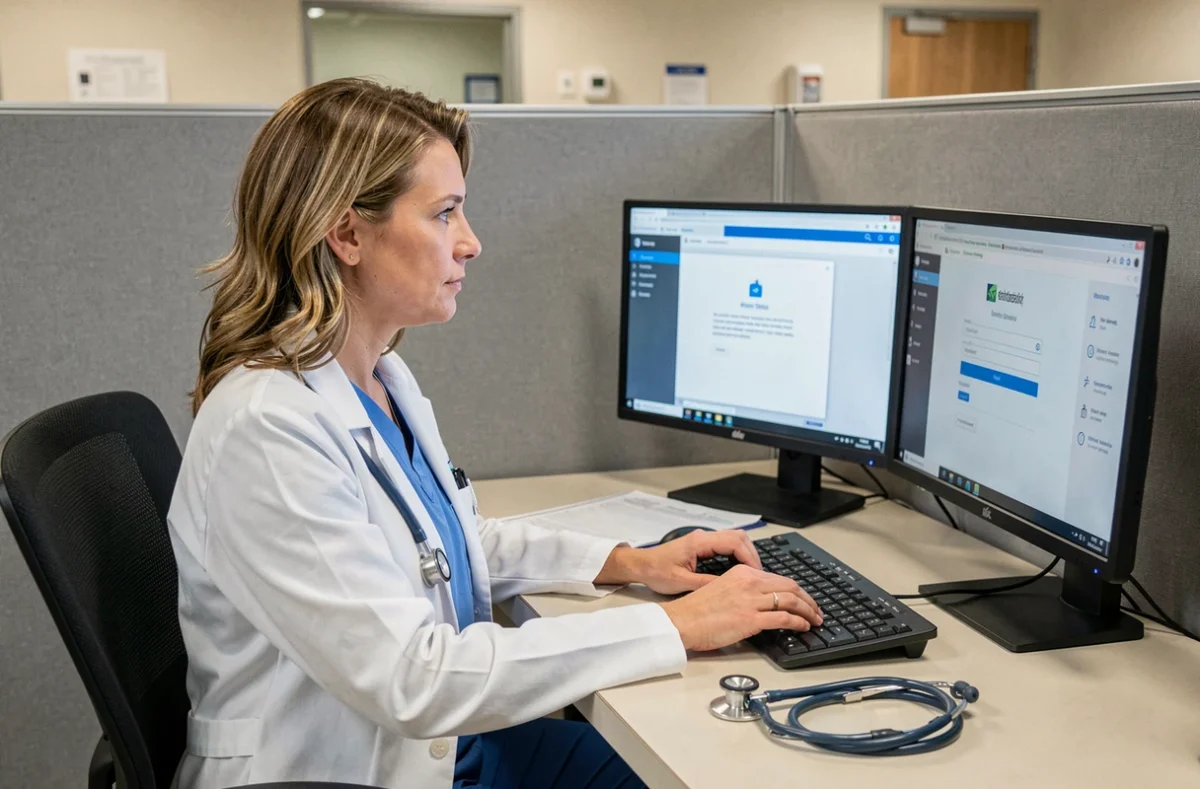
The professional messaging system of the CHU of Montpellier relies on multi-factor authentication (MFA) and a site-segmented network. For a hospital agent, the speed of access depends less on password knowledge than on the chosen connection method and the device used. Each combination (internal network, remote access, shared workstation, personal mobile) exposes data differently and generates distinct bottlenecks.
Comparison of connection methods to CHU Montpellier messaging
Three scenarios cover almost all use cases: connecting from the internal network of the CHU, remote access via a web browser, and using a mobile application on a personal device. The table below summarizes their differences based on the criteria that condition access to CHU Montpellier messaging without incident.
| Criterion | Internal network (fixed workstation) | Remote access (web browser) | Mobile application (personal device) |
|---|---|---|---|
| MFA enrollment required in advance | Yes, this is the only environment where initial enrollment can take place | Not feasible for the first activation | Not feasible for the first activation |
| Local message storage | No (session linked to shared workstation) | No (ephemeral web session) | Yes (local synchronization on the device) |
| Risk of residual session | High on shared workstation | Low if the browser is closed | Moderate (persistent notification) |
| Off-site availability | None | Total after MFA enrollment | Total after MFA enrollment |
The most revealing column is that of local storage. The mobile application synchronizes messages on a personal device, creating a copy of health data outside the technical perimeter of the CHU. The web session, on the other hand, retains nothing after the browser is closed.

MFA enrollment from the internal network: a constraint that many discover too late
MFA enrollment must be done from the internal network of the CHU. Attempting to activate the one-time code from a guest Wi-Fi, from home, or via mobile hotspot blocks the procedure without an explicit error message.
The agent must be physically present in a department of the CHU, connected to the wired network or professional Wi-Fi, to associate their account with an application like Microsoft Authenticator. Once this step is validated on the internal network, subsequent connections from outside become possible.
Shared workstation in the care room: a recurring trap
On a shared workstation (care room, on-call office), the previous agent may have left a session open. The browser may also prompt to automatically save credentials. These two situations distort the enrollment or cause an account lockout.
- Before any connection on a shared workstation, check that no previous session is active in the browser and delete saved credentials
- Always use private browsing mode to avoid the persistence of authentication cookies
- Never accept the browser’s suggestion to save the password, even if the workstation seems dedicated to a single service
These precautions may seem basic, but they represent the primary cause of support tickets during the first weeks of a new agent.
Changing phones and losing the second authentication factor
Changing or losing a smartphone constitutes a bottleneck that few agents anticipate. The second MFA factor is tied to a specific physical device. Changing phones without transferring or disabling the enrollment means losing access.
The recovery procedure goes through the IT department of the CHU, which must reset the MFA association. This process can take several hours, or longer if the request is made outside of support hours.
Anticipate before a leave or device replacement
Checking the status of MFA enrollment before a long leave or a planned phone change prevents being left without access to messaging upon return. An agent locked out of the internal network cannot restart enrollment alone: they must return physically to the site after IT intervention.
In contrast, an agent whose enrollment is active and functional on their new phone retains remote access without interruption. The difference between these two situations hinges on a few minutes of verification before departure.
Web session or mobile application: exposure of health data
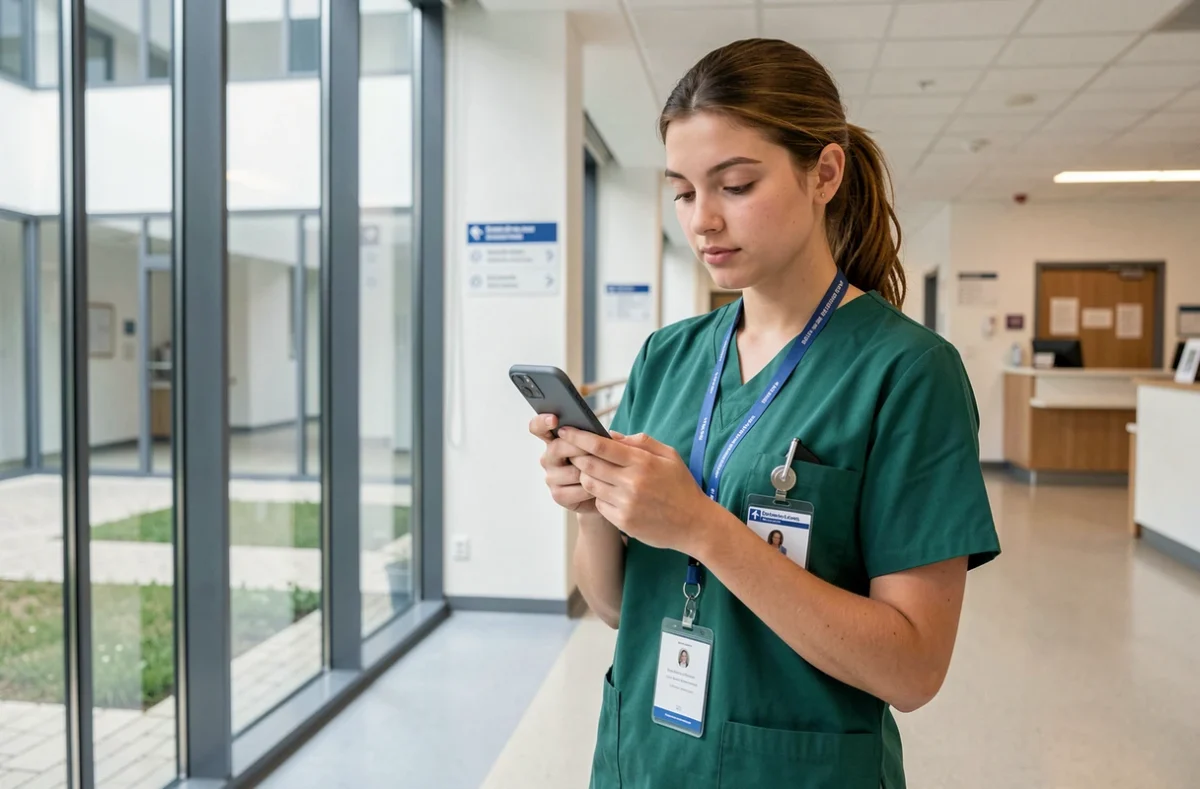
The distinction between web access and mobile application goes beyond mere comfort. A browser session does not store any data locally after closure. The mobile application, on the other hand, synchronizes a copy of messages on the device, including attachments that may contain health data.
For an agent using their personal phone, this means that information covered by medical confidentiality may end up on a device not managed by the IT department of the CHU. In case of theft or loss of the phone, this data becomes accessible if the device is not protected by robust locking.
Which mode to favor depending on the context
On a fixed workstation at the CHU, the question does not arise: the session closes upon disconnection. Remotely, the web session remains the least exposed option for consulting sensitive messages. The mobile application is justified for agents frequently on the move (on-call, inter-site travel) who need real-time notifications.
- Occasional consultation from home: web session with browser in private mode, systematic closure after use
- On-call or inter-site mobility: mobile application with biometric phone locking and enabled storage encryption
- Shared workstation in service: web session in private browsing, mandatory manual disconnection
The choice of connection mode is not a matter of comfort preference. It determines the level of control that the agent retains over the data they consult, and the exposure surface in case of an incident on the device.
The messaging system of the CHU of Montpellier operates reliably once MFA enrollment is correctly completed on the internal network. The real friction point focuses on this initial activation and the management of the device associated with the second factor. Choosing between web session and mobile application comes down to balancing immediate accessibility and control of locally stored data.