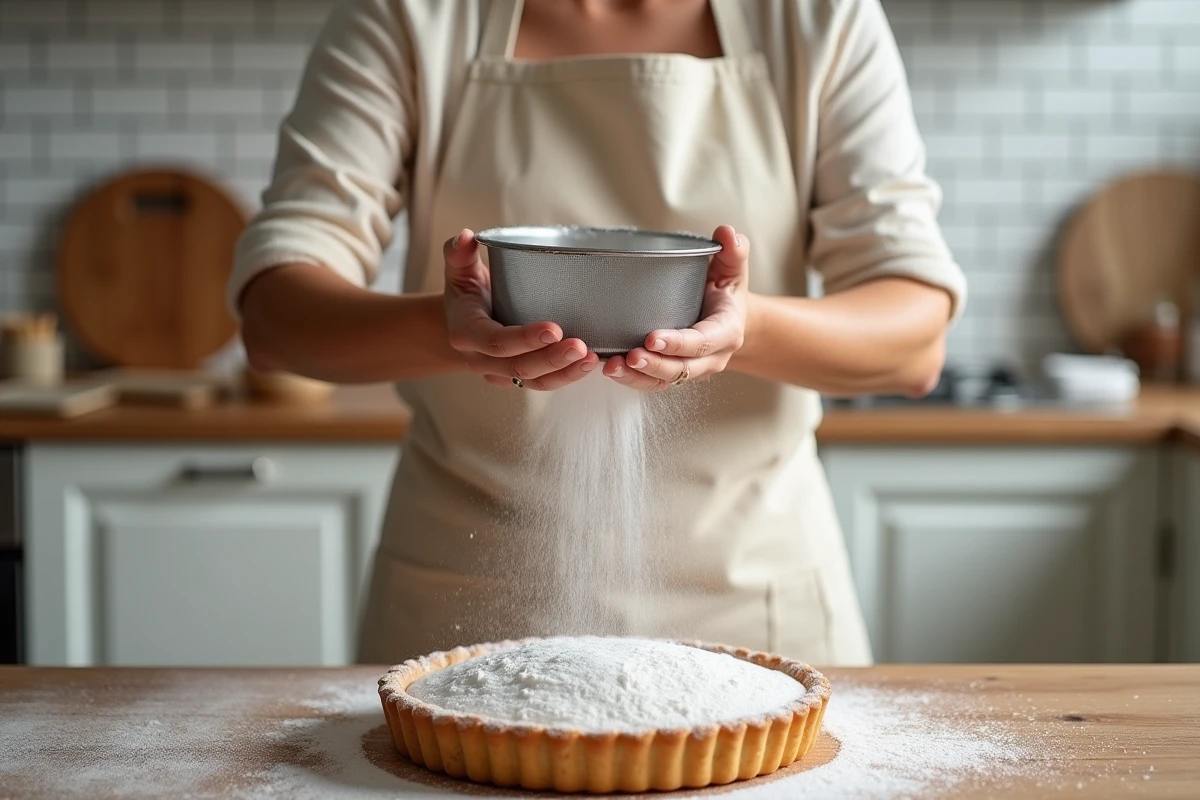
You just sprinkled powdered sugar on a cake, and twenty minutes later, the surface is bare again. The sugar has melted, absorbed by the moisture from the cake or the surrounding air. This problem affects most homemade pastries, and the cause is almost always the same: powdered sugar comes into contact with a source of water, even if it’s invisible.
Why powdered sugar melts on your cakes
Powdered sugar is a very fine powder, with a huge surface area relative to its volume. This fineness makes it particularly sensitive to moisture. As soon as it touches a surface that is still warm or slightly damp, it absorbs water and dissolves.
Two factors accelerate the phenomenon. The first is the temperature of the cake at the time of sprinkling. A cake that has just come out of the oven, even if cooled for a few minutes, still emits steam. The second is the ambient humidity in your kitchen: steam from a pot, an open dishwasher, or a poorly ventilated room is enough to dissolve the sugar on the surface.
Have you noticed that powdered sugar sticks better on a shortbread than on a soft pound cake? It makes sense: dry-textured pastries release less water on the surface. A very soft cake, a gooey brownie, or a freshly unmolded yogurt cake are the worst candidates for a lasting sprinkle.
Some pastry chefs apply the tips from Gastronomie du Jour to work around this problem by treating the surface of the cake before sprinkling.
Preparing the surface before sprinkling powdered sugar
The key to making powdered sugar stick is to create a barrier between the powder and the moisture of the cake. Several methods work, depending on the type of pastry.
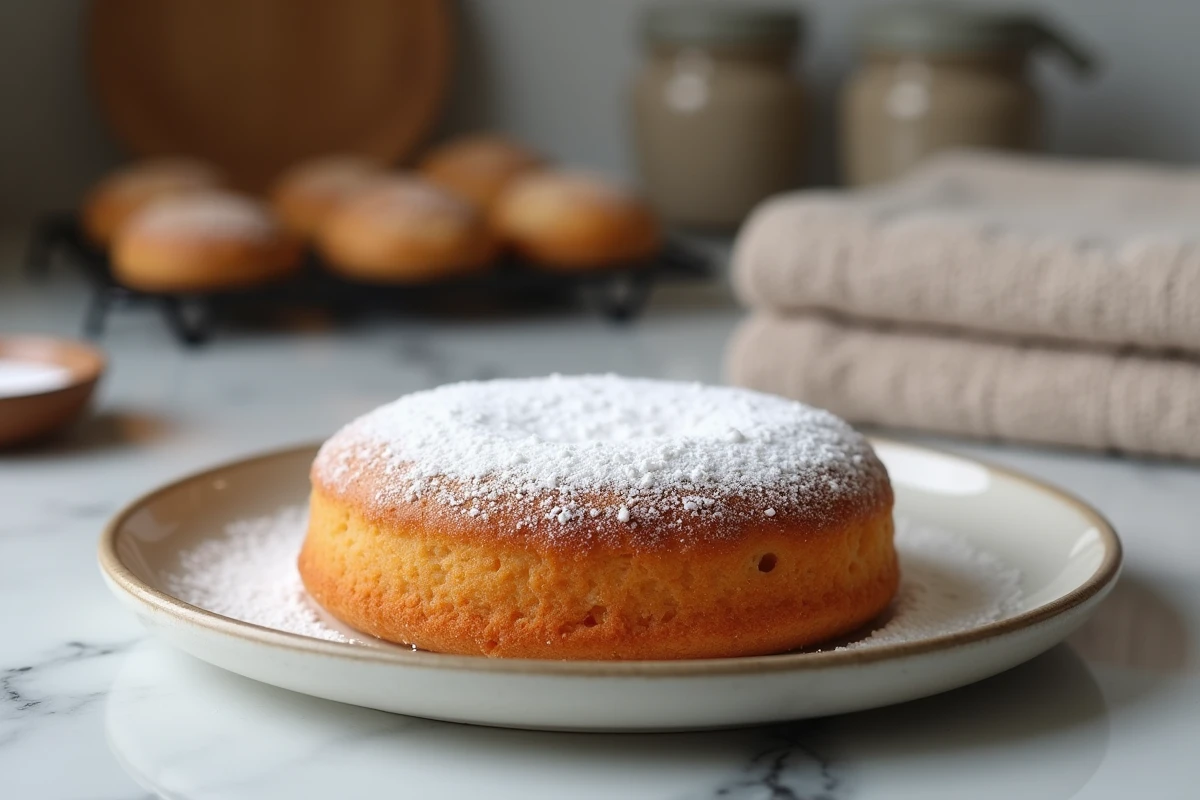
Using a layer of fat or chocolate
A thin layer of set ganache, melted chocolate brushed on, or even cocoa butter creates a waterproof film. The powdered sugar placed on top no longer comes into direct contact with the moisture of the cake. This technique is the one most often used by professional pastry chefs on entremets and tarts.
For a discreet result, spread a very thin layer of melted white chocolate on top of the cooled cake. Let it crystallize for a few minutes, then sprinkle. The chocolate forms an invisible and effective barrier.
Opting for a dry glaze or crystallized fondant
On certain pastries like cream puffs or éclairs, a well-crystallized glaze provides a dry and stable surface. Powdered sugar adheres better to a texture that is already dry than to a cream or icing that is still fresh.
If you are working with a plain cake without icing, wait until the surface is completely cool and dry to the touch. Place your hand flat: if you feel even the slightest warmth, wait a little longer.
Powdered sugar and cornstarch: the game-changing mix
The most accessible trick is to mix powdered sugar with cornstarch (maizena). The cornstarch absorbs ambient moisture before the sugar dissolves, extending the hold of the sprinkle.
- Mix about one part cornstarch to three parts powdered sugar, adjusting according to the desired visual result
- Sift the mixture to obtain a smooth powder without lumps
- Sprinkle through a small fine sieve or a tightly woven strainer for an even coverage
This powdered sugar and cornstarch mixture holds for several hours, even on slightly moist cakes. The taste remains neutral if the proportion of cornstarch is kept moderate.
Some commercial powdered sugar manufacturers already add cornstarch to their formula. Check the label: if “corn starch” or “starch” is mentioned, your powdered sugar is already partially stabilized.
Sprinkling at the last moment: the professionals’ reflex
Professional pastry chefs prefer to sprinkle just before serving. This habit is not a coincidence: even with the best preparations, powdered sugar migrates after a few hours on a cake stored at room temperature.
If you are preparing a cake the day before for a birthday or meal, save the sprinkling for the next morning. Store the cake without powdered sugar, covered with plastic wrap, in the refrigerator or in a cool place. Take it out, let it come to room temperature, then sprinkle.
Stencils and powdered sugar decorations
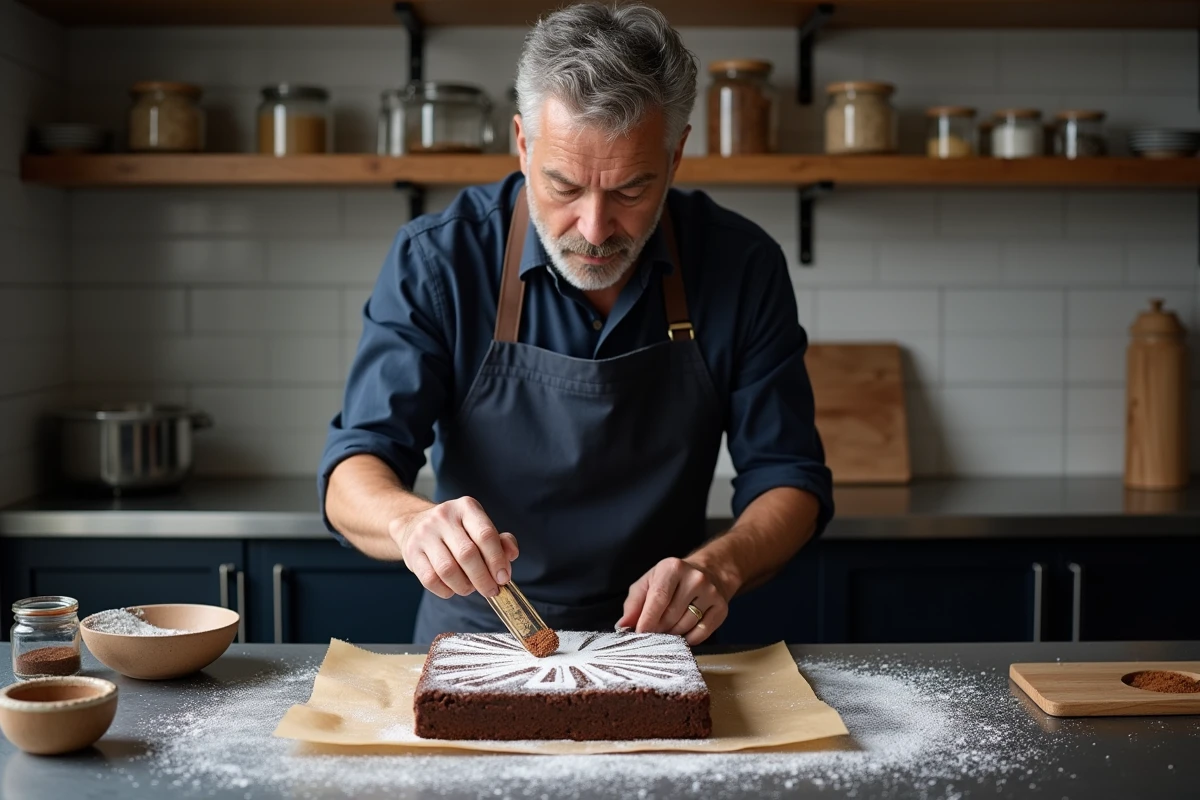
For a neat visual effect, use a stencil placed on the cake before sprinkling. The sugar only settles in the open areas, creating a sharp pattern. Carefully remove the stencil by lifting it straight up to avoid smudging the edges.
Stencils work best on flat and dry surfaces. A domed cake or a sticky icing will result in a blurry outcome.
Alternatives to classic powdered sugar for long-lasting hold
If your pastries need to remain presentable for several hours (buffet, display, transport), classic powdered sugar is not the best choice. There are alternatives.
- Stabilized snow sugar (also called “snow sugar”) resists moisture and heat due to its composition enriched with vegetable fats. It remains white and powdery even on damp surfaces
- Unsweetened cocoa powder holds better than powdered sugar on greasy surfaces like ganaches or chocolate mousses
- A mixture of powdered sugar and dried egg white (royal icing) hardens as it dries and does not migrate at all, but it changes the visual texture of the decoration
Stabilized snow sugar can be found in specialty pastry shops. Its cost is higher than standard powdered sugar, but it eliminates the problem at its source.
The choice between these options depends on the time you have between finishing and serving. For a cake served within the hour, classic powdered sugar with cornstarch is more than sufficient. For a dessert that will sit on a buffet all afternoon, stabilized snow sugar or royal icing is more suitable. Adapt the method to the serving context, not just to the cake alone.