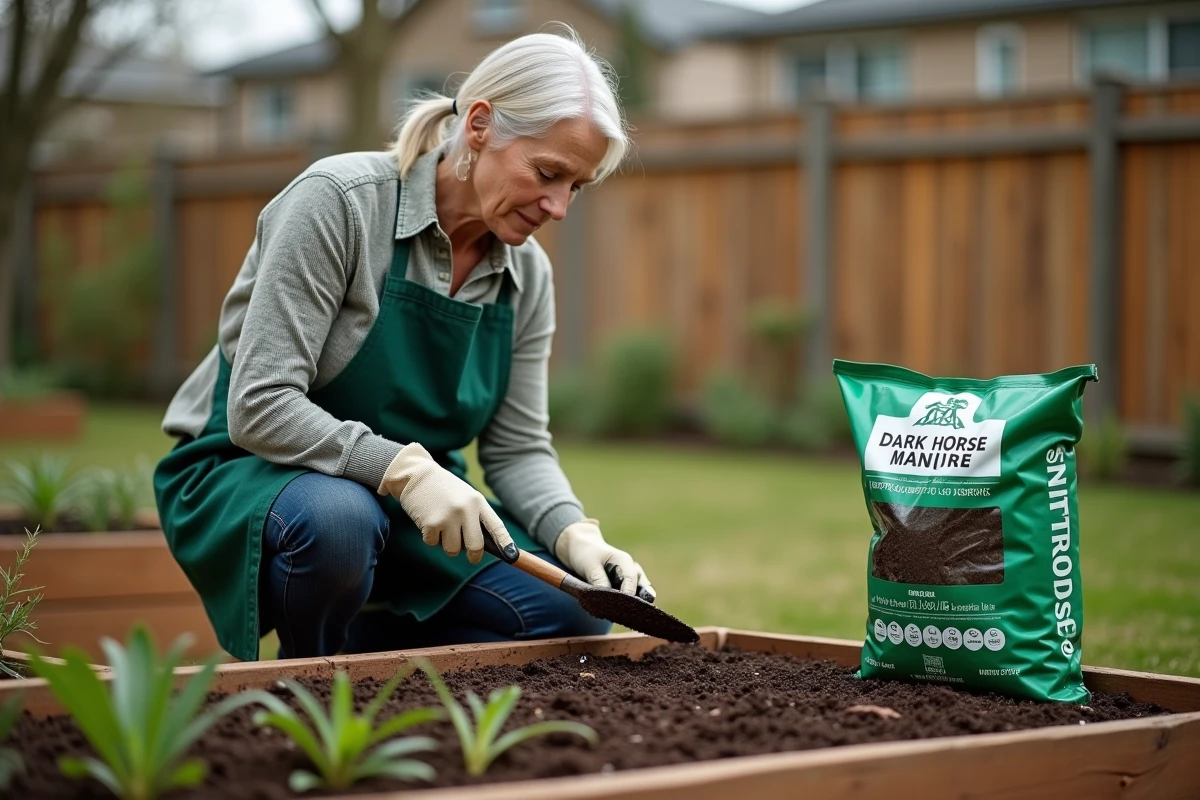
The horse manure sold at Lidl comes in dehydrated form, packaged in bags. This format radically alters the carbon/nitrogen ratio compared to fresh manure from an equestrian center, and this technical distinction conditions everything else: dosage, spreading period, effect on soil life.
C/N Ratio of Dehydrated Manure: What the Packaging Changes for the Soil
Fresh, straw-rich manure has a high C/N ratio, often skewed towards carbon due to the bedding. The industrial dehydration process accelerates the loss of volatile ammoniacal nitrogen. The packaged product that arrives on the shelf therefore has a tighter C/N ratio than raw manure, but also a lower total nitrogen content in absolute terms.
In practice, we observe that this type of dehydrated amendment acts more as an organic structuring agent than as a nitrogen fertilizer. Relying on it to meet the nitrogen needs of nitrogen-hungry leafy vegetables would be a fertilization mistake. Its main role remains the supply of stable organic matter, capable of improving water retention capacity and soil porosity.
To compare offers and check the price of horse manure at Lidl during seasonal operations, it’s best to monitor promotional catalogs, as this product is not permanently stocked on the shelf.
Seasonal Availability at Lidl and Timing Your Purchase Strategy
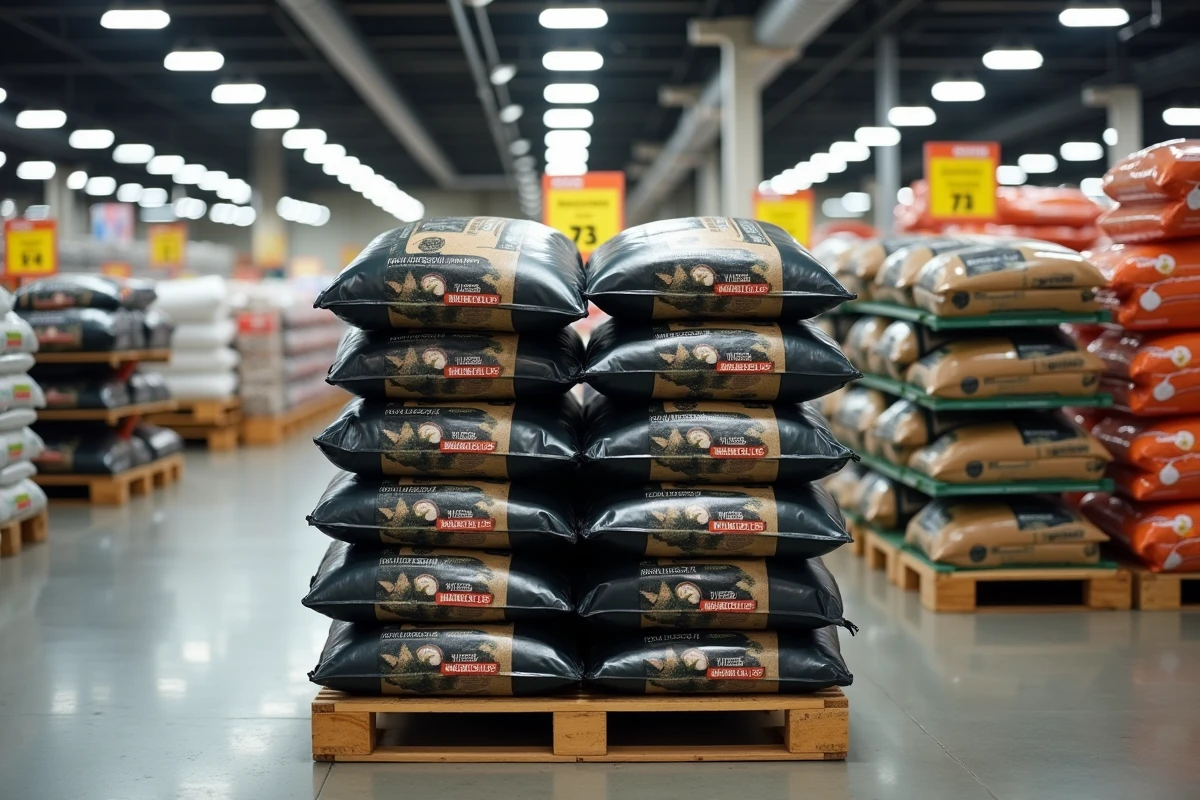
The horse manure at Lidl is subject to occasional promotional availability, primarily visible through weekly catalogs and flyer aggregators. It is not a staple product available year-round.
This commercial seasonality generally coincides with peak garden demand: late winter for preparing vegetable beds, and autumn for foundational amendment before winter. We recommend stocking up during these windows, as the dehydrated packaging can be stored without difficulty for several months in a dry location.
The bagged format, lighter than fresh manure at an equivalent volume, facilitates transport and storage. For a gardener without direct access to an equestrian center, this is a logistical compromise that makes sense, provided one does not overestimate the fertilizing richness of the product.
Dosage and Incorporation into the Vegetable Garden According to Soil Type
The classic mistake is to overdose dehydrated manure, thinking to compensate for its lower concentration compared to fresh manure. An excessive, poorly calibrated organic matter input can temporarily disrupt microbial activity, mobilizing available nitrogen to the detriment of existing crops.
The dosage directly depends on soil texture:
- On heavy clay soil, a moderate application in autumn, scratched into the surface, improves structure without risking waterlogging. Dehydrated manure decomposes slowly and helps to loosen clays over several seasons.
- On sandy, well-draining soil, incorporation can be more generous as organic matter compensates for water retention deficits. A spring application remains possible if the product is well decomposed.
- On loamy soil, surface application before winter, covered with mulch, protects against crusting and promotes earthworm activity.
In all cases, never bury dehydrated manure deeply. Incorporation should be done within the top ten to fifteen centimeters, where the biological life of the soil is most active.
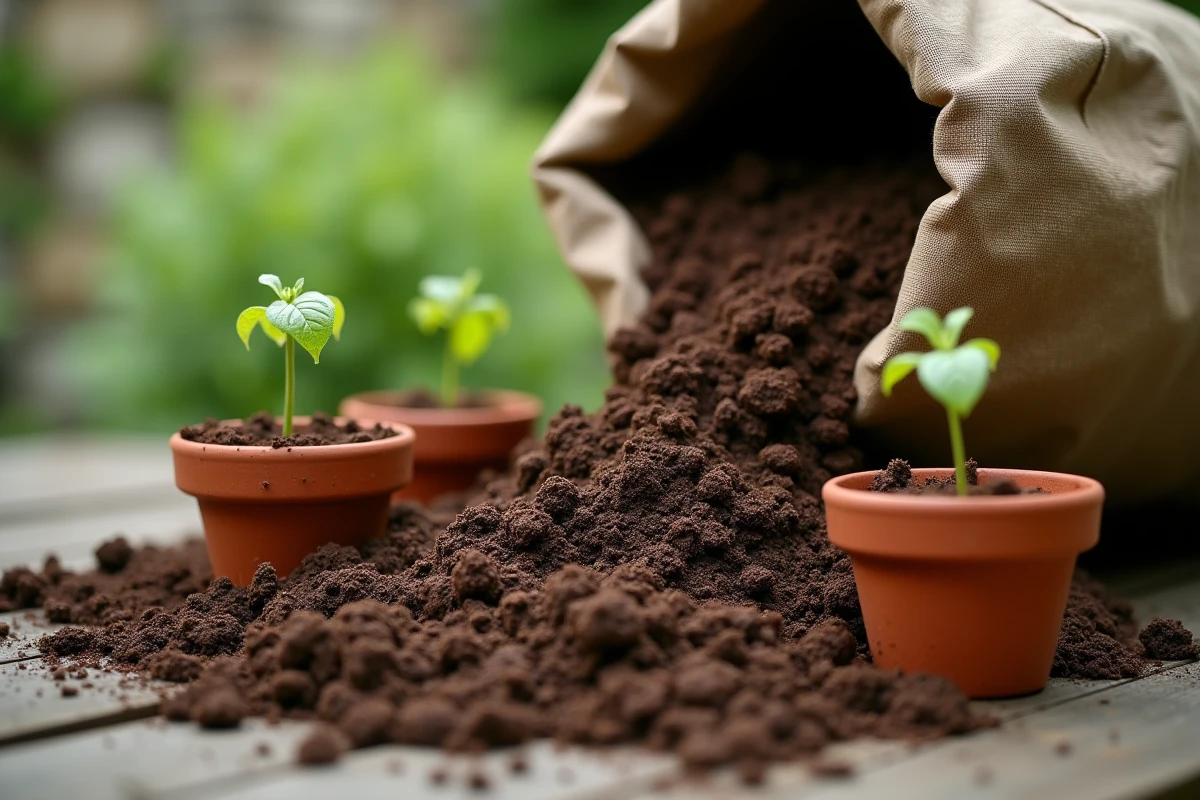
Dehydrated Manure versus Homemade Compost: Complementarity, Not Substitution
Contrasting bagged horse manure and homemade compost makes no agronomic sense. These two amendments do not fulfill the same function in the soil’s organic matter cycle.
Homemade compost, made from green waste and kitchen scraps, provides already humified organic matter, rich in diverse microorganisms and immediately assimilable nutrients. Dehydrated manure contributes a more fibrous organic matter that nourishes soil fungi, promoting the mycorrhizal network beneficial to perennials, fruit trees, and flowers.
The combination of both creates a broader nutritional spectrum:
- Compost fuels the rapid growth of vegetables and annual plants in spring.
- Dehydrated manure structures the soil deeply and supports fungal life in the long term.
- When used together in autumn, they prepare balanced soil for the following season, without the need for additional mineral fertilizer for most vegetable crops.
We observe that gardeners who combine these two sources achieve a looser soil by the second year, with better resistance to summer drought.
Health Precautions and Residual Weed Seeds
Horse manure, even dehydrated, may contain weed seeds not destroyed by drying. The temperature reached during industrial dehydration does not always guarantee complete sterilization of seeds from dock, thistle, or amaranth present in the original bedding.
To limit this risk, two approaches work. The first is to compost the dehydrated manure for a few weeks before use, mixing it with moist green waste: the temperature rise in the pile eliminates the majority of viable seeds. The second, simpler method, involves autumn spreading followed by a false seedbed in spring, allowing weeds to germinate and then be destroyed before planting.
Horse manure remains a reference amendment for the garden, provided it is treated as an agronomic tool and not as a miracle product. Its effectiveness depends on the timing of application, soil type, and complementarity with other organic inputs. A well-used bag at the right time is worth more than three bags spread randomly.