Brittany has a dense network of associations, festivals, craftspeople and project leaders who sometimes struggle to gain an online presence beyond their immediate area. A website designed to showcase the region can make a real difference, provided it goes beyond simply serving as a shop window. Several recent initiatives show that structuring local information online creates tangible opportunities to bring visibility to talents and projects that would otherwise remain confined to word of mouth.
Shared database and showcasing Breton initiatives online
Most regional websites operate in silos: each organisation enters its own listings, with no links to other local stakeholders. The result is a patchwork of isolated, poorly indexed pages competing for the same local search queries without giving visitors an overview.
A more effective approach is to pool data. Info Jeunes Bretagne documented the creation of a shared editorial database for several local platforms providing young people with access to information about their rights. It was developed in collaboration with local stakeholders. This kind of shared foundation allows each contributor to add structured information that can be updated and reused by other services.
The same principle applies to a regional showcase website: a shared database for local stakeholders prevents information from becoming fragmented and improves search engine rankings. Google indexes a website that brings together rich, interconnected content more effectively than a constellation of isolated pages, each with just a few lines of text.
A group from the Dinan area launched the website “Que faire en Bretagne”, which lists activities available across the region. At launch, just over 9,000 places and events were already listed. This gives an idea of the work involved in structuring the information, as well as the visibility such a project can generate once it reaches a critical mass of content.
For anyone wishing to discover the new BreizhPower website – the 100% Breton magazine!, the initiative illustrates this approach to a unifying regional platform, designed to connect initiatives rather than simply place them side by side.
Local SEO in Brittany: how a regional website can help project leaders
A craftsperson based in a rural town in Côtes-d’Armor or Finistère does not have the same resources as a national brand when it comes to SEO. Their own website, if they have one, may struggle to rank for searches such as “potter Brittany” or “music festival Morbihan”. The competition on Google is uneven.
A well-built regional website helps level the playing field. By bringing together listings for talented individuals, associations and events under one domain, it shares the website’s authority with each individual page. Internal links between listings strengthen the signals sent to search engines.
Three technical mechanisms play a direct role:
- Structured data markup (schema.org) can generate rich results on Google, including the location, date and activity category, helping to increase click-through rates.
- Geotagging content by town or traditional Breton region improves rankings for local searches, including those made on mobile devices.
- Regular website updates (adding events, news and new profiles) send freshness signals that encourage search engine crawlers to revisit the site.
Project leaders listed on an active regional website gain visibility without having to master the intricacies of SEO themselves. The website acts as a technical intermediary between local talent and online audiences.
Digital accessibility and inclusion: an often-overlooked aspect of regional platforms
A region’s talents can only be showcased if the website is accessible to as many people as possible. Yet compliance with RGAA (the General Accessibility Improvement Framework) remains a weak point for many local platforms. Megalis Bretagne, the joint association that supports Breton local authorities in their digital transition, offers an accessibility toolkit to help public and community organisations bring their websites into compliance.
Accessibility is more than a legal requirement. An accessible website reaches audiences its competitors overlook: people with disabilities, older adults and users in rural areas with slow internet connections. Sufficient colour contrast, keyboard-friendly navigation and alternative text for images are not merely cosmetic details.
For a website aiming to bring together initiatives from across an entire region, overlooking accessibility means excluding some of the very people it claims to serve.
Breton cultural sector: connect existing networks rather than create duplicates
The temptation when launching a new regional website is to build everything from scratch. The most sustainable initiatives build on networks that are already well established. Films en Bretagne, for example, brings together film and audiovisual professionals, including the Collectif des festivals, which is committed to the cultural sector’s ecological transition. These organisations already have contact databases, event calendars and skills directories in place.
Connecting a regional website to existing databases rather than duplicating them avoids two pitfalls: contributor fatigue from being asked yet again to enter the same information, and the rapid obsolescence of copied data with no update mechanism.
In practice, this means using data feeds (APIs, RSS feeds) to connect the regional website with sector-specific platforms. The website then becomes an intelligent aggregator, not a competitor to existing organisations.
Digital skills: a real barrier for some Breton stakeholders
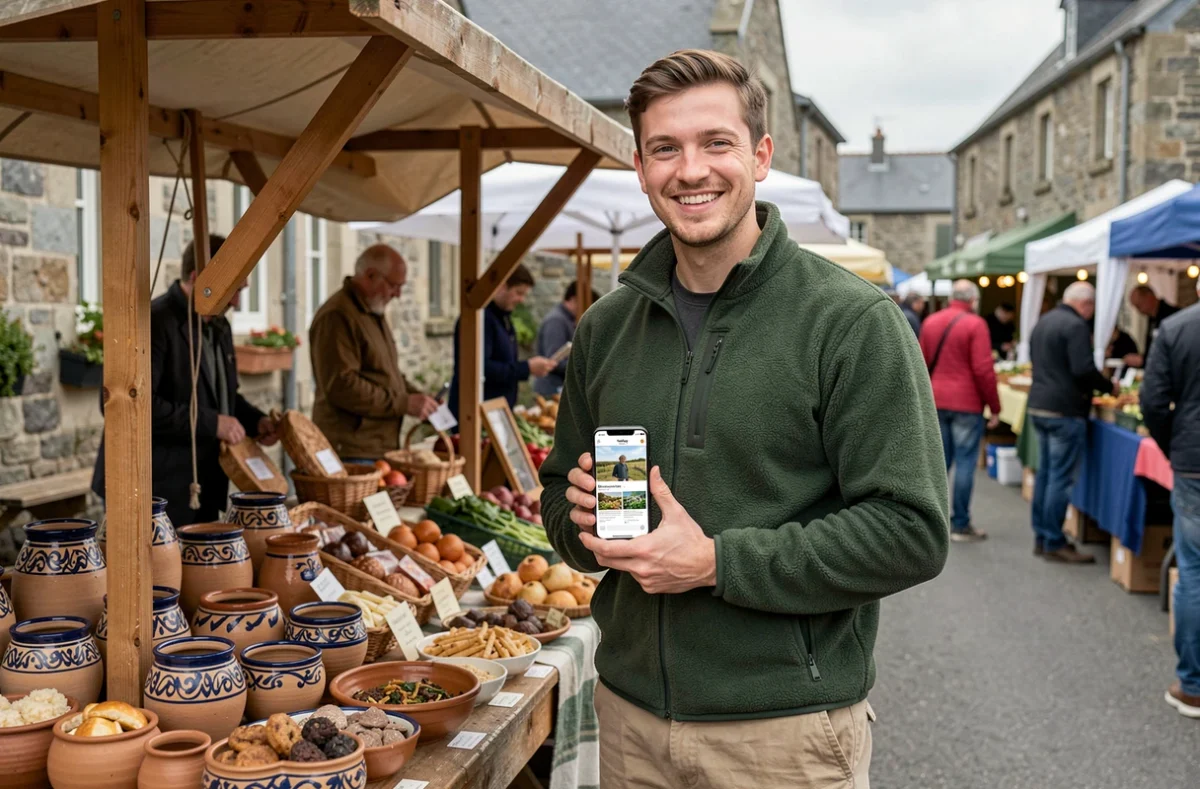
Internal digital skills remain a blind spot. Creating a profile on a regional platform requires a basic level of digital confidence. Some associations and craftspeople, particularly in rural areas, lack the staff to keep their listings up to date. A regional showcase website must provide human support, not just a data-entry interface.
Digital workshops run by media libraries or France Services centres could act as local support hubs, provided the website is designed from the outset to fit into these support programmes.
A regional website can only showcase Breton talent in the long term if it addresses a structural problem, not just a communications one. Bringing data together, pooling SEO efforts, ensuring accessibility and building on existing networks: these technical choices determine the project’s real reach, far beyond its design or domain name.